New Commuter Meal Plans Draw Limited Interest
Students Weigh Structure and Convenience Versus Practicality
With approximately 60% of Webster undergraduates commuting to campus, the university identified a need to offer commuter meal plans. Last fall, Webster Dining launched new options for commuters in hopes of better accommodating them.
According to Danielle Jones, general manager of dining services at Webster, 19 commuters had meal plans at the start of the spring semester. About half of these students had one of the new commuter plans, while the remaining students had full meal plans.
Any student not residing on campus is eligible for a 48- or 16-block plan per semester.
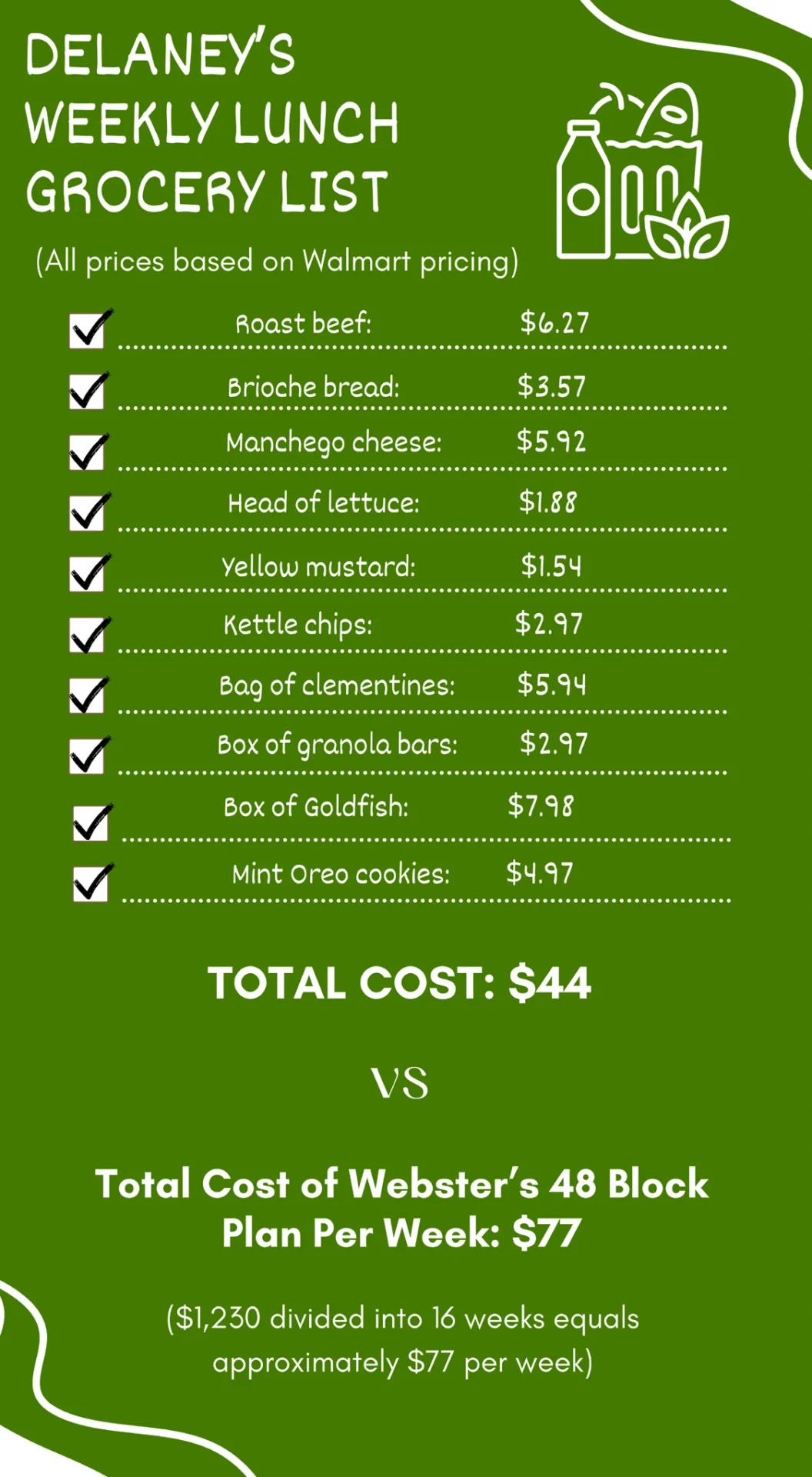
Jones defined the 48-block plan as intended for students who are on campus about three times a week and get a meal each time. The plan includes 500 dining dollars, along with the 48 block meals and costs $1,230.
The 16-block plan is recommended for students who are on campus once or twice a week and want a meal during those times. The 16-block plan includes 16 block meals and 325 dining dollars for the cost of $620.
“Pricing was approached with an emphasis on balance – considering food quality, operational costs, labor and the variety of dining options available on campus, while also keeping student needs in mind,” Jones said.
The commuter meal plans aim to provide flexibility and consistency for students who spend part of their day on campus; however, not all commuters feel the new options fit the reality of their routines.
“The plans give off-campus students consistent access to campus dining during class days, study sessions and campus events, without needing to make individual purchasing decisions each time they eat,” Jones said.
Commuter student Jes Gunter does not have a meal plan, as they feel it is not a convenient addition to their schedule.
“I don’t think it’s worth spending the money on,” Gunter said. “I don’t live that far away from here, and especially with the way that my schedules were both last semester and this semester, I didn’t really feel like I would use it that much, even if I had one.”
Gunter is often in class from 11 a.m. to about 2 p.m. Webster’s main dining hall, Marletto’s Marketplace, is only open for lunch from 11 a.m. to 1:30 p.m., which would make it difficult for Gunter to take advantage of a meal plan.
“Especially on Tuesdays and Thursdays, because I have longer classes, I’ll bring something with me [from home]. I have a little cooler in my car,” Gunter said.
Delaney Jurgensmeyer, another Webster commuter without a meal plan, feels similarly to Gunter about the cost and overall likelihood of even using it.
“I’m not on campus so much that I need to have food every day here, and on the few days where I do eat here, I feel like it’s cheaper to just bring my own lunch,” Jurgensmeyer said. “Then I can have more of a choice over what I’m eating, as well.”
Jurgensmeyer faces another problem when it comes to dining on campus: She doesn’t have a debit card. Because dining locations at Webster operate as cashless, Jurgensmeyer is unable to purchase food on campus without a meal plan.
“Yesterday, I forgot my lunch and I only had cash, so I just sat and was hungry all day,” Jurgensmeyer said.
While the cost of a commuter meal plan is a factor preventing both Gunter and Jurgensmeyer from purchasing one, Jones said that there are options to make the pricing more manageable. Meal plans and dining dollars can be charged to student accounts, allowing them to be paid off over time.
Jurgensmeyer recognizes that she might be more inclined to purchase a commuter meal plan if there were smaller blocks than the two currently offered.
“Ideally, I’d just make it [the commuter meal plan] smaller, I suppose, or make it more customizable,” Jurgensmeyer said.
According to Jones, the meal plans have been successful, so far, in their goal of supporting commuter needs and routine, noting that students use them most frequently during longer stretches on campus.
With 19 commuter students purchasing a meal plan out of Webster’s 60% commuter population, interest in the plans remains low.