
Coping with the Present
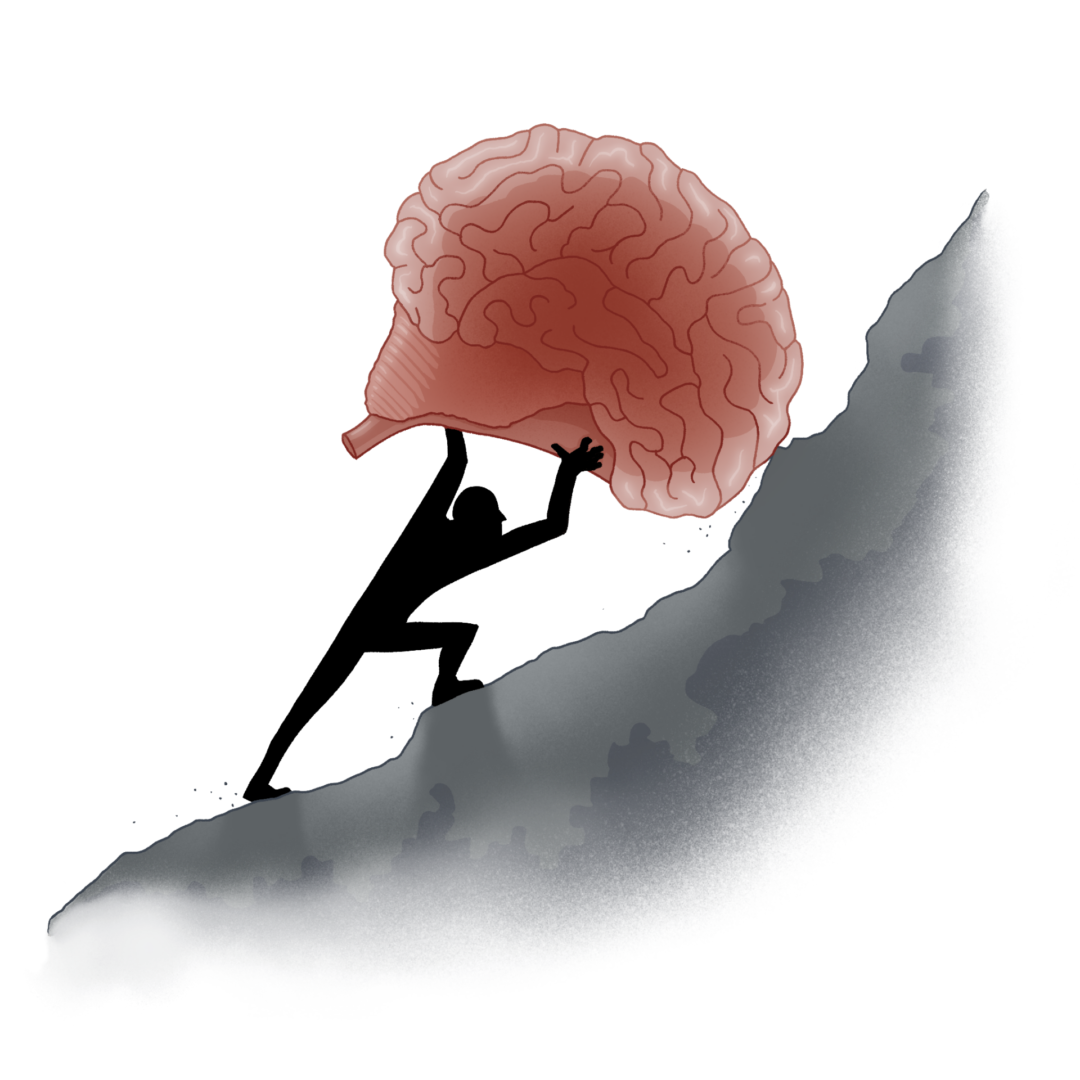
French philosopher Albert Camus once said, “The absurd is born of this confrontation between the human need and the unreasonable silence of the world.”
Doesn’t our world seem quite absurd today?
It seems like every day, there’s something going on that a few years ago would’ve been a “South Park” episode or a story from The Onion. It’s getting harder and harder to live in a world where nothing seems real anymore. For instance, the number 67 has become a meme that has become rampant on TikTok turning the number into brainrot – and oh, the rise of fascism and violence is seemingly more prevalent. It’s hard for all of this not to weigh on the average person’s mental health. So, how can we, as human beings, rise above all of this and manage to just be okay?
There are multiple factors that can weigh on a college student’s mental health today: the internet, the current political climate, Gen Z’s loneliness epidemic, and, of course, trying to maintain a work-life balance. It can seem tricky trying to navigate this and come out mentally okay.
I, for one, don’t have all the answers to these questions, which is why I sought out Samantha Sasek, the assistant director of Counseling and Life Development here at Webster University.
Sasek told me validation of what we can control and especially what we can’t is key to helping students, especially those in underrepresented communities, who are negatively impacted by politics today. Control is something we all want to have because it makes life predictable, and when things are predictable, there’s less fear because you know what to expect. While we can’t control other people, Sasek says we can control the care we give ourselves.
The best thing we can do is to uplift students of color, LGBTQ+ students, disabled students, immigrant students and any other students whose lives were made unpredictable because of the current administration.
Their fear is valid. Not being in control of your life is scary, especially during college, which is when you’re supposed to look forward to a brighter future. Now, you don’t even know what that future may look like.
Will the world be on fire by the time you graduate? Who knows? As far as I’m concerned, it certainly is a possibility.
Growing up in the digital age, most of Gen Z doesn’t know a world without the internet. We have all become hyper-aware of ourselves and each other since the moment we got a phone.
The internet exposed us to echo chambers and has been detrimental to our dopamine receptors, getting messed up from hours of doomscrolling.
According to Sasek, online algorithms can serve to divide us by limiting and prohibiting “critical thinking, perspective taking and listening to understand versus fighting to be right.” In other words, it just drives a larger wedge between people.
I’m not saying the internet is all bad, there is some good to be had. Many people I know have made genuine friendships, but I also know there are many who have become depressed because of their time alone online. The key to the internet is balance and being able to think critically about what you’re exposed to.
Another issue I’ve noticed negatively impacting not just students here at Webster but Gen Z as a whole is the use of artificial intelligence (AI) as an attempt to better one’s mental wellbeing. There are plenty of things wrong with AI, from how it can be damaging to the environment to how it steals artwork from artists via generative AI.
Additionally, AI often gives users a false sense of reality that can cause serious harm, such as causing psychosis, and in some cases, leading people to take their own life due to AI bots designed to be agreeable and keep users in an addictive loop of faux validation and affection.
AI isn’t like humans. AI won’t reject you or make you feel as though you are at fault for anything. That obviously makes us, as people, feel good, but it doesn’t help us improve ourselves in any meaningful way because rejection and holding ourselves accountable is what builds character.
“If we never learn to tolerate rejection, then we don’t learn effective communication skills to manage conflict in our romantic or interpersonal relationships. Because of AI, there is no conflict; because the bot is just going along with what we want it to do,” Sasek said.
There’s no formula for dealing with or improving one’s mental health, but there are resources like counseling, treatment and more from Student Health Services and Counseling and Life Development that are provided free-of-charge to students.
Those who need immediate mental health support can use Protocall’s 24-hour crisis line, (314) 246-7030, to speak with a counselor. TogetherAll, a peer-to-peer anonymous online resource, provides space for students to freely share whatever is on their mind. You may also stop by in person at Student Health Services at 540 Garden Ave., just west of the parking garage.
Camus once compared the absurdity of life to the story of Greek mythological figure Sisyphus, who was condemned by the gods to eternally roll a falling boulder up a hill. Camus said one must imagine Sisyphus happy – a rebel hero smiling in the face of life’s absurdity.
Bettering mental health isn’t an immediate thing, it’s something we work on daily. It’s OK to take things one day at a time, it’s OK to be scared or sad. What matters is how we choose to respond.
