
Nepal in flames: Watching my country rise again
On most days, I try not to get on my phone as soon as I wake up. But on Sept. 8, I reached for it first thing in the morning. What I saw next sent a chill down my spine: a post that read, Who Do You Call When the Police Murders? I froze with fear.
I knew exactly what had happened. It had happened before.
I gripped my phone tightly, my fingers crossed, lips mouthing a prayer. There’s only so much you can do when your people take to the streets to protest decades of corruption while you live oceans away.
Then I saw it: a video of a young boy in a school uniform, being rushed to a medical facility after being shot in the head. His body already lifeless.
I remembered my call with my brother just the day before, when he excitedly showed me his college uniform, the one he planned to wear on the day of the protest.
My chest tightened, my stomach churned and my hands shook so badly I almost dropped the phone.
I hurriedly called my brother, my heart pounding so loud I could barely hear the ringtone. The phone rang and rang, each unanswered second leaving me more paranoid. Finally, he picked up. The moment I heard his voice, I broke down.
He was safe. It wasn’t him. But that lifeless body in the streets of Kathmandu was still somebody’s brother, somebody’s son.
Within the next hour, more videos of young protesters gunned down by police flooded my screen. What began as a peaceful Gen Z protest had turned into a massacre, leaving 51 dead and hundreds injured.
Questions raced through my mind. Why were police shooting young, peaceful protesters? Why was international media framing it as a protest against the recent “social media ban?” Why did the news insist they used rubber bullets when the videos clearly showed metal ones?
Meanwhile, my day here in St. Louis went on, as usual. But in Kathmandu, people raced through a terrifying night as police roamed and threatened every alley.
As my night deepened, I got a call from my family; it was already morning there. I begged them to stay inside, to lock their doors. My mom’s voice was calm — almost too calm — masking the sadness I could hear between words. She told me not to worry, to focus on my classes.
But how could I? I felt an unbearable weight of guilt for the safety and future I was promised while my family’s, my people’s, my nation’s were being stolen.
That night I barely slept.
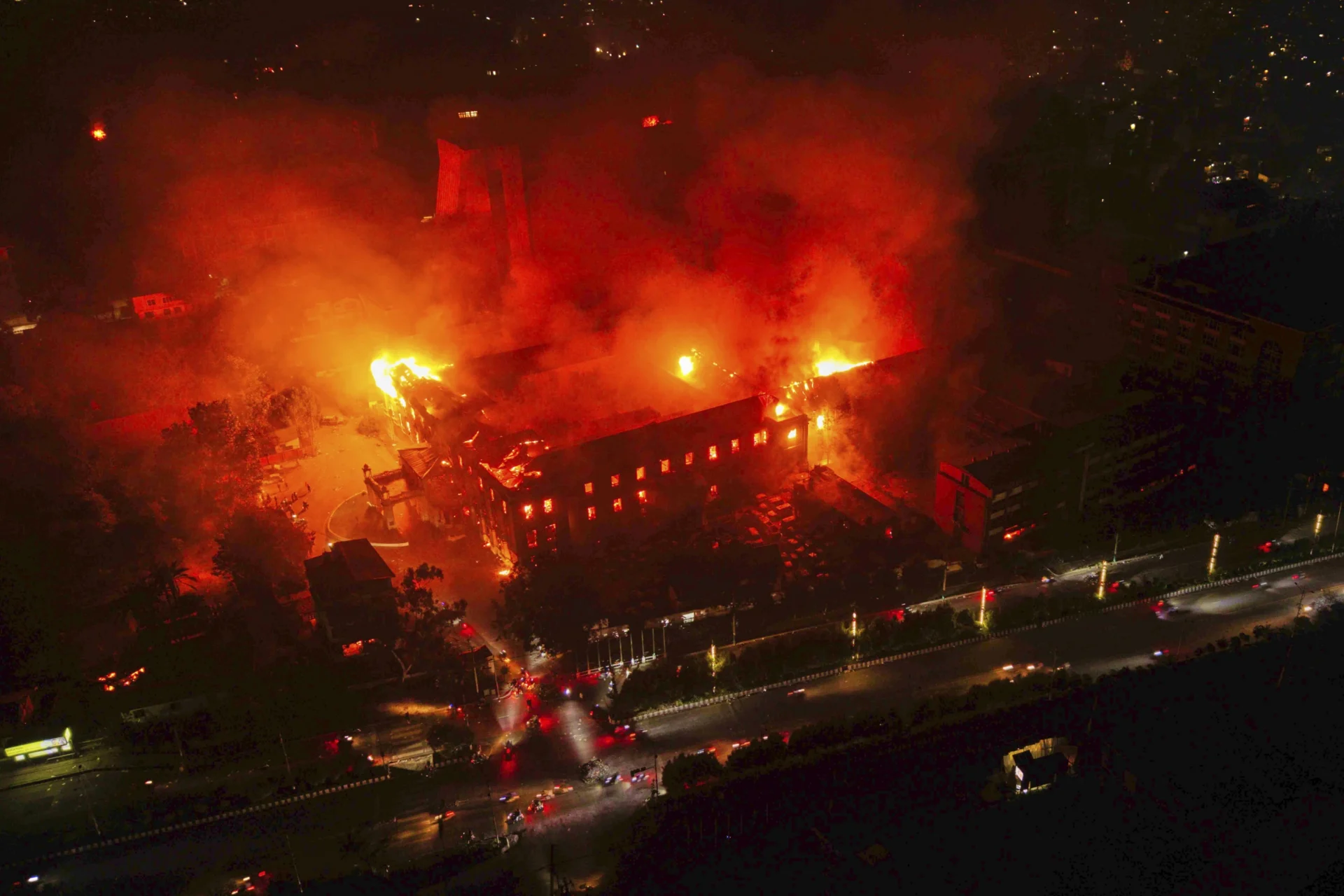
When dawn broke on Sept. 9, I reached for my phone again, hands trembling. The first headline stopped me cold: Prime Minister Oli’s house on fire. One after another, the news flooded in; every major politician’s house, the parliament building, Singha Durbar, the Supreme Court, police stations and even supermarkets were ablaze. The prime minister had resigned. The government collapsed. Police were killed, politicians were assaulted and civilians roamed Kathmandu with weapons seized from burning police stations.
How did a protest brutally silenced just yesterday erupt into such chaos today?
The entire nation seemed to be burning.
In the middle of it all came another shocking headline: former home minister Rabi Lamichhane had been released from prison, leading to the escape of 1,500 other prisoners. Then, a news post from weeks earlier started to resurface: Former Prime Minister and a prominent Nepali politician, Prachanda, had a meeting with Rabi.
Videos from the protest began circulating, showing members of the Maoist political party setting buildings on fire. At the same time, several political party groups and pages on Facebook suddenly changed their names to appear as Gen Z groups.
That’s when it clicked. Was Prachanda’s Maoist political party behind all this? Were they attempting to destroy evidence of political corruption while making it appear like Gen Z protestors were behind the chaos? Was the Gen Z protest hijacked?
Were we just pawns in someone else’s game?
While I sat in safety, drowning in these questions, chaos consumed Kathmandu. Escaped prisoners roamed freely, looting shops, terrorizing neighborhoods, spreading fear with every step. The city I knew became unrecognizable.
I couldn’t imagine how much worse it might have become if the army hadn’t intervened. Their presence on every corner finally gave Nepalis a fragile sense of relief. But the damage had already been done. The thick smoke rising from our burned legislative buildings, executive offices and judiciary courts left the future of our nation blurred.
In the ashes, our youth began to understand: Nepal needed not just a leader, but a guardian; someone to protect and guide us, at least until the next election. Gen Z then debated who the interim Prime Minister would be over a Discord call.
The debate stretched for hours, split between Kathmandu’s mayor Balen Shah and former Chief Justice Sushila Karki. On Discord, it felt less like a casual call and more like a chaotic parliament meeting. My younger brother couldn’t stop grinning, he said he felt like a member of parliament casting his vote.
Strange as it may sound, Gen Z chose a leader that night. Someone who knew the law inside and out, who had never bowed to corruption, who stood unflinching in the face of power. They demanded Karki’s appointment. To ensure no corrupt politician could ever crawl back into power, they also called for the parliament to be dissolved.
Amid it all was Sudan Gurung, our trusted Gen Z representative, who waited more than nine hours in Sheetal Niwas for the president to hear our demands.
After what felt like an eternity, the meeting finally happened. And history was made:
Nepal had its first-ever female prime minister. The parliament was dissolved.
We lost so much in those two days. Yet in my heart, I carry an undeniable pride. We proved how powerful we are when we stand together. Bringing down a corrupt government and seizing control in just five days is commendable.
But what follows matters even more. The choices we make now will determine the answer to the question echoing across our nation: What’s next for Nepal?
Krishtina Regmi of Nepal is in her first year as a graduate student at Webster University. She serves as Student Media Manager for the School of Communications.
