
We Can Not Go Back
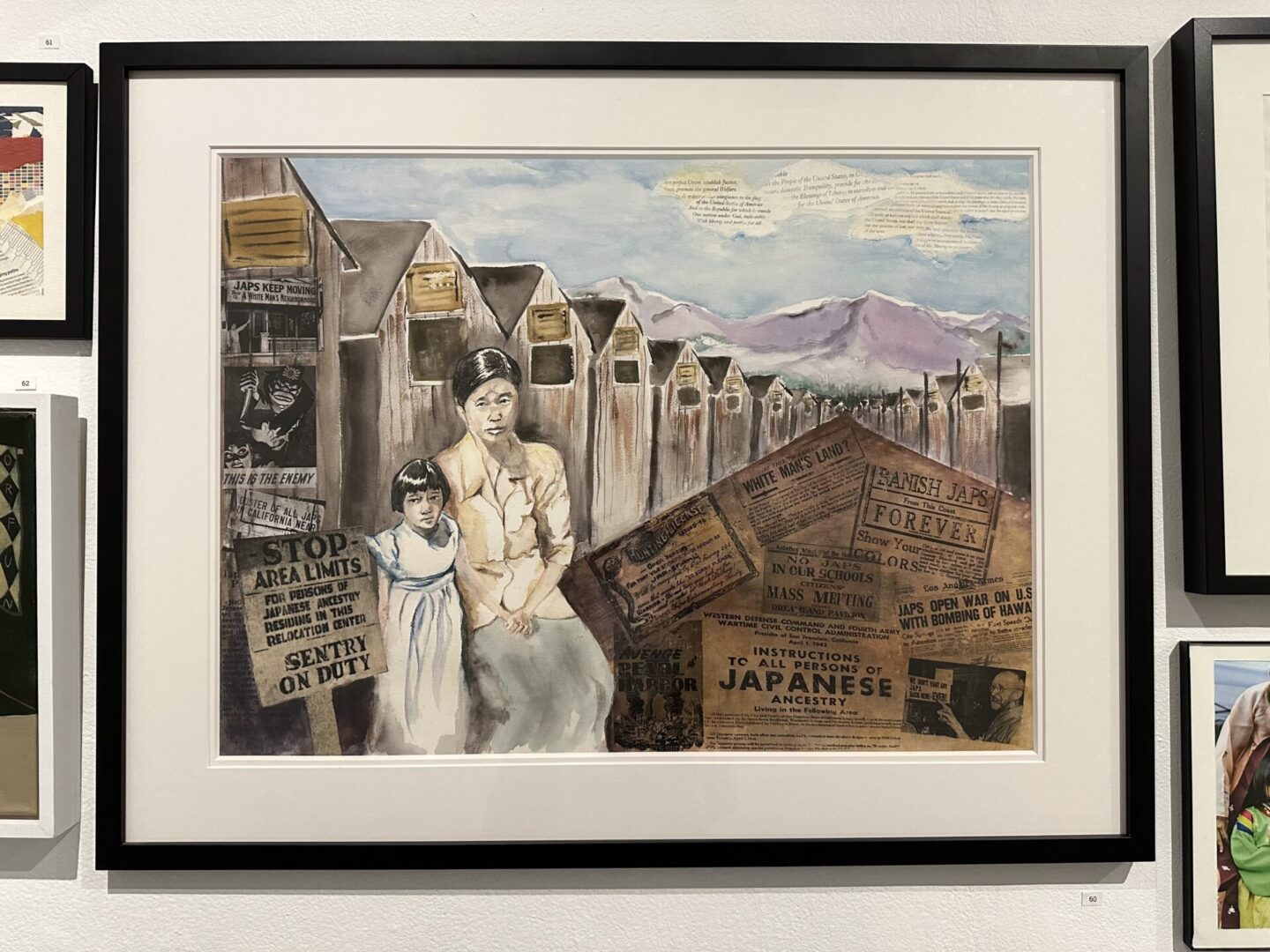
Thousands of Japanese and Japanese Americans found themselves wrongfully imprisoned in internment camps following the attacks on Pearl Harbor in the 1940s.
Twenty years later, people marched in protest down the streets of their towns and Washington, D.C., writing songs calling for peace, equality and an end to the Vietnam War.
Throughout the 2020s, marches called for reform of broken systems, focusing on the police killings of Black Americans.
Today, wars are raging across the globe in Palestine and Ukraine, inciting worldwide outrage, protests and calls to action.
Modern-day internment camps are reappearing in the U.S., such as the now-closed “Alligator Alcatraz.” And on Fort Bliss, the largest Immigration and Customs Enforcement (ICE) detention center is currently under construction. The fort, an Army post in Texas, was once used as a Japanese internment camp during World War II.
For many of the older generation living in the U.S. today, it seems as if history is repeating itself.
Eleanor Craig, a member of the Sisters of Loretto, grew up in Webster Groves, where her family has lived for generations. She could go outside to ride bikes until dark with no supervision and walk the same route down Lockwood to school for 16 years. Craig attended Nerinx Hall High School and graduated from Webster College (now Webster University) in 1967.
Craig has remained vocal about her beliefs, protesting against injustices when she saw them. In high school, she had a Black classmate be denied service in a restaurant, leading to conversation in the school about what they can do. In college, she organized a “study in” to educate other students at Webster College about the war in Vietnam. In her sophomore year, she joined the Sisters of Loretto, a religious order that stands firm on social issues, including nuclear energy, poverty, racial disparities and women’s rights.
“I better put my body where my mouth is,” Craig said. “… I allow myself to be recruited regularly.”
For Craig, history does not quite repeat, but rather moves in waves.
“We’re being overwhelmed with waves of what I call selfishness and blindness and white supremacy,” Craig said.
Living in the rural South, Craig is surrounded by what many call “Red State attitudes.” She values educating and advocating for herself, as well as those around her, about the past, including recognizing the Sisters of Loretto’s early years of being slaveholders and playing a negative part in the history of Native American culture.
“I would say my reaching out, my activism, really isn’t just imitative or guilty. I’m really moved by passion on those two matters, and my own inner sense that we have responsibilities, and we just have to get on with it because of who we were in the past,” Craig said.
On the other hand, Robin Hattori, a third-generation Japanese American, feels history is indeed repeating. Hattori’s grandparents came from Japan and settled in California in the early 1900s. When Japan attacked Pearl Harbor in 1941, anxiety overtook the Japanese communities within the U.S.
“The Japanese American community was worried about what that meant for Japan – the country that they’re from – and America, the country that they adopted, to be at war with each other,” Hattori said.
President Franklin D. Roosevelt issued Executive Order 9066, rounding up tens of thousands of Japanese immigrants and Japanese Americans who were told only to bring what they could carry.
When they were first assembled, Hattori’s family was taken to a fairground and placed in horse stalls with no electricity and no running water. They lived in such conditions for a couple months, unsure of what would happen next. Both sides of Hattori’s family were part of the round up, including both her parents – who were only small children at the time – and were placed on a train from their homes in California to the unfamiliar land of Arkansas.
For almost four years, the family lived in an internment camp, experiencing the psychological trauma of having their freedom revoked on account of their race. When they were released, they were given only $20 and a ticket to wherever they wished. Having to navigate a world they were locked out of, Hattori’s family ended up just north of Arkansas in St. Louis.
“It’s a strong part of my identity and sort of what I care about, because, you know, it’s one thing to hear about someone’s oppression or injustice, and to feel empathy for that when it happens within your own family or in your own circle, I think it makes it another level,” Hattori said.
Japanese and Japanese Americans lost their sense of identity and culture following their forced incarceration. Afraid to face prejudice, many tried to assimilate as much as they could into American culture: They stopped speaking their native language and avoided teaching it to their children.
Even after the war ended, the Japanese had a target painted on their back. And because many Asian Americans were wrongfully suspected of being spies, some began wearing buttons saying, “I’m not a Jap.”
These days, Hattori presents to schools and civic centers to share her family’s story. She ends her presentation with the question, “Why does it matter?”
“I want people to know this story because we have to learn from our history and not let it happen again,” Hattori said, “… the past couple of years, I’ve really had to think about the fact that saying all of that still, in a way, hasn’t mattered at all, because I’m seeing it play out again.”
Hattori is referring to the Enemy Aliens Act, used to intern Japanese Americans, and now used to deport people in the U.S. without due process. What was used against her family in the 1940s has now been brought back into effect today.
“I’m in a quandary right now, trying to figure out what to do because before it was always theoretical, and now, it’s no longer theoretical,” Hattori said.
Concerns of Hattori are ones many immigrants and people with family histories of immigration are having to face. Is the knock at the front door someone wanting to take you in for questioning? Will a social media post cause you or your family trouble? The uncertainty of what comes next and what can be done, safely, to push back against injustice is a looming dark cloud.
“It’s these kinds of discussions and the dissemination of these stories, that’s gonna at least point us in the right direction,” Hattori said. “I know people are like, oh, let’s quit talking and let’s actually do something, but you’ve gotta have dialogue and understanding as that basic stepping stone.”
