
Webster defends DEI mission
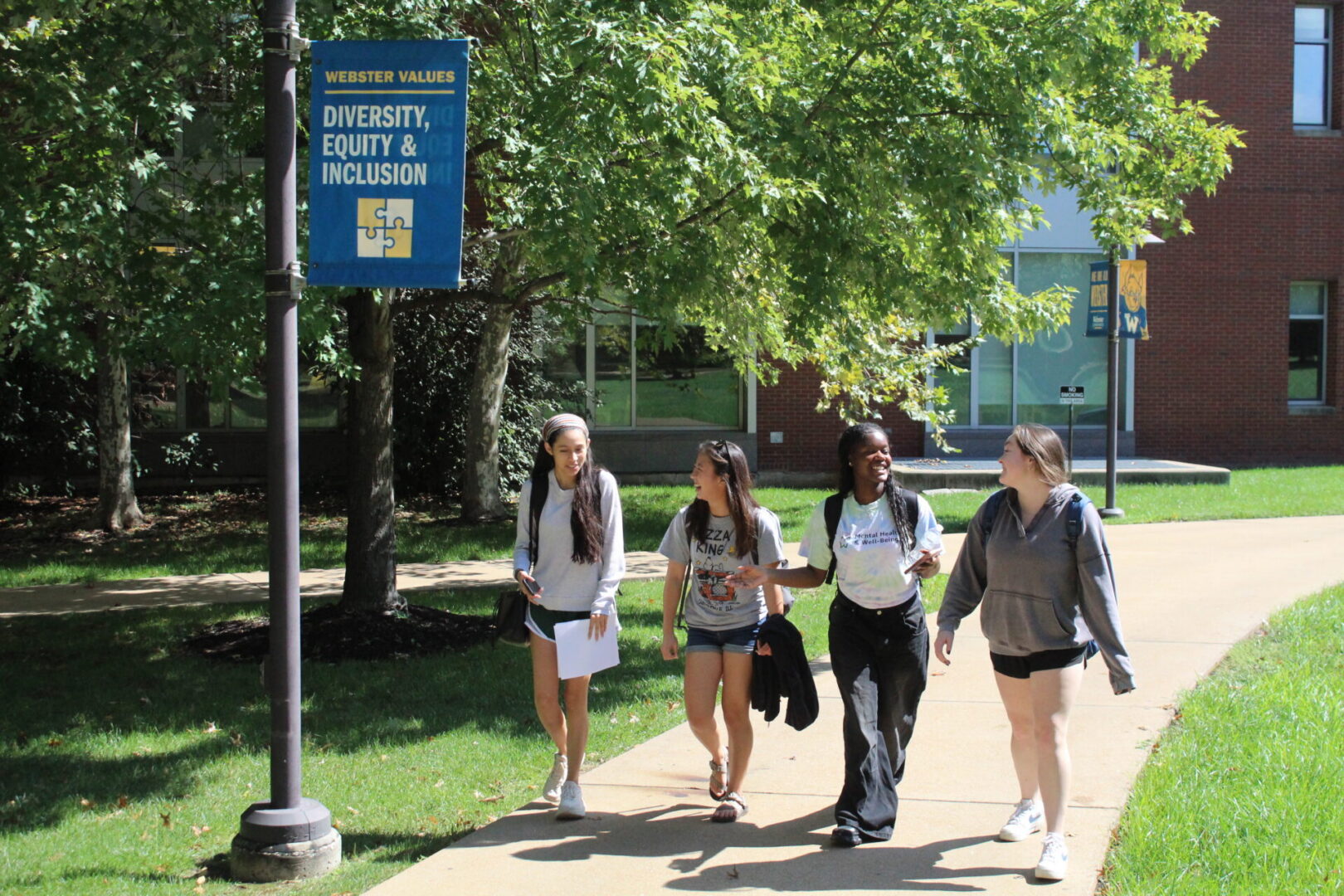
The Trump administration’s crackdown on diversity, equity and inclusion (DEI) won’t stop Webster University from prioritizing these values and supporting international students.
Within days of his inauguration earlier this year, President Trump issued executive orders targeting DEI in the private and public sectors, including at colleges and universities across the country.
Despite such constraints, Webster is maintaining its stance on DEI, a commitment emphasized by university President Tim Keane, who told an audience of students, faculty and staff during Fall Convocation, “Webster will not back down” when it comes to its core values.
“We should see people as people and be willing to celebrate all of the diversity that they bring and all the multiple identities that they have,” said Vincent Flewellen, the university’s chief diversity officer. “My office, my title, has not changed.”
Over the last six months, the Trump administration clamped down on international student visas, temporarily pausing and then limiting entry, as well as increased vetting that includes monitoring social media accounts of those who apply. Enforcement of the changes caused delays and left many accepted students without embassy or consulate appointments in time for the fall semester.
Some projections, including one from the nonprofit Association of International Educators (NAFSA), show as much as 150,000 fewer international students enrolled at U.S. colleges this fall.
Lisa Blazer, vice president of enrollment, said Webster is working to help students enter and remain in the country safely. The university sent clear communication on required entrance documentation and provided access to eight designated school officials (DSOs) for each international student to provide advising, emergency response and continued support for up to three years after graduation.
Despite the national decline, Webster’s international diversity increased. Last fall, Webster had 29 nationalities on campus; this fall, that number rose to 41.
With the president actively going after Harvard University and its ability to enroll international students, many private universities are feeling the heat to do the same, but Webster isn’t capitulating.
“We’re not going to be limiting international students,” Blazer said. “With all of our international footprint, why wouldn’t we want to embrace international students on our campuses here in the U.S.? That’s part of who we are.”
Webster’s DEI efforts also include support for transgender students, a group the Trump administration has targeted since day one. Trump issued an executive order proclaiming the U.S. will recognize two sexes, male and female, which requires the federal government to use the term, “sex” instead of “gender.” “These sexes are not changeable and are grounded in fundamental and incontrovertible reality,” the order says. The order also blocks schools requiring teachers and staff to use names and pronouns that align with transgender students’ identities.
Women, gender and sexuality studies professor Elizabeth Hoover said that regardless of federal policy, Webster recognizes students’ chosen names and pronouns.
“I don’t care what the official policy is. In my classroom, I won’t tolerate transphobia. I will use your real name in my classroom, I will use your real pronouns,” Hoover said.
When Webster switched to a new academic program at the beginning of the school year, some transgender students’ “dead names” appeared in Canvas, an error the university quickly corrected.
Faculty and staff also stepped up to support the LGBTQ+ Alliance when the student group lacked an adviser. Instead of one, the club now has three.
“This is just a safe place for us to chill, hang out, maybe learn some things, maybe play some games, watch a movie. I think that, in this time, you need just a safe place to be gay, to be yourself,” said Mickey Hosack, LGBTQ+ Alliance president.
Hoover said that being yourself is vital to academic achievement, explaining that studies show masking, or concealing one’s identity, takes a mental toll and negatively affects academic success.
“When people are able to show up with a sense of authenticity, they perform better, they have better outcomes,” Hoover said.
Hoover stated that while her department is exceptional at respecting a student’s true identity, she has heard that some professors in other departments might not be as adept at accepting someone’s chosen name.
“So, I think maybe, if I had anything to say to my colleagues, if they read the newspaper, it’s now the time to reconsider what’s important to you. And maybe in this time of overwhelm, you can’t change federal policy, but you can change how an individual student feels in your classroom and whether they feel like they can show up in your classroom,” Hoover said.
More than 120 years ago, the university’s founders – a group of nuns trying to make a difference – made it their mission to give traditionally marginalized students access to quality education. Today, that commitment continues.
“I am an American citizen, and part of what makes America great is its diversity of people,” Flewellen said. “Our Statue of Liberty, she says something about sending everybody, and that’s who we are. We open up our doors, literally, to embrace the diversity so that we can be the best that we are.”
