
Student Athletes Navigate Nutritional Challenges
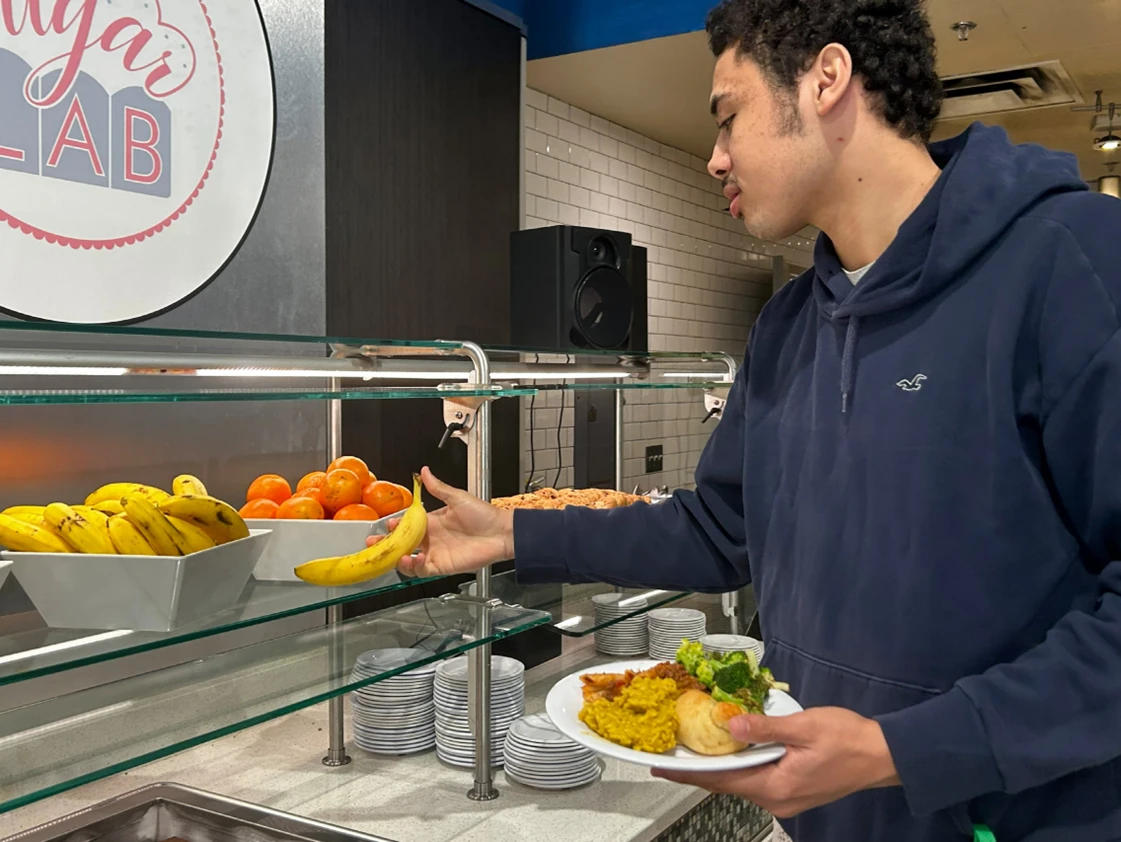
After a late two-hour baseball practice and a 25-minute drive back from the field, Webster pitcher Wes Carter walks into the dining hall knowing one thing: He might be getting the leftovers.
“For me, it’s the hours,” Carter said. “You’re either rushing over there to get there at 6:45, and you already know you’re getting the scraps, or you have to go somewhere else and spend money.”
For student athletes at Webster University, food is more than fulfilling an appetite, it is fuel for performance. While Webster provides reliable meals and covers the basics, athletes say inconsistent hours and limited nutrition guidance make it difficult to fuel their bodies at the level their sport demands.
Dallas Harding-Fair, a center for the men’s basketball team, said nutrition is essential to staying dominant on the court.
“I try to eat peanut butter, apples, bananas – make sure I don’t cramp up,” Harding-Fair said. “I’m the biggest guy on the court. I need my body at top percent.”
He typically eats rice and chicken bowls from the University Center or goes to Marletto’s after class. Instead of soda or heavier foods, he chooses lighter options ahead of games. He appreciates the variety, but when practice runs late, leaving campus becomes unavoidable.
“If I have practice from 6 to 8, I won’t be able to make it to the dining hall,” he said. “So I’ll have to go off [to] Smoothie King or Chipotle.”
For volleyball players, the issue also comes down to timing. First-year middle-blocker Carley Hersberger said scheduling quickly became a problem. Evening matches often ended past service hours with Marletto’s closing at 8 p.m. and Crossroads in the UC closing at 5 p.m.
“By the time we put the net away, we’d be done by 8:30 or 9, and then Marletto’s would be closed,” Hersberger said. “That was probably the biggest issue.”
While she believes dining has improved, Hersberger, who was previously vegetarian, said dining hall options made her first semester difficult due to the scarce plant-based proteins.
“The only option was pretty much the veggie burger,” she said. “It was hard to get the protein in.”
For baseball players, travel adds another layer of complexity. Carter said the team plays at a stadium in Sauget, Illinois, about 25 minutes from campus, which squeezes meal times and limits proper nutrition.
“As a college athlete, eating has to be your job as much as a class or practice does,” Carter said.
On road trips, the team often stops at places like Chipotle or Cracker Barrel to meet players’ nutritional needs. Carter also relies on protein shakes and meal-planning apps to track his intake.
When dining halls close early, athletes often turn to off-campus fast food, which adds financial pressure. Carter said that first-year athletes may feel that pressure most.
“You don’t want to be concerned about where your next meal is going to be,” he said. “Your first year of college is hard enough.”
Athletes said coaches emphasize hydration and smart calorie choices, but formal nutritional planning remains limited. Harding-Fair and Hersberger believe that hiring a nutritional specialist would benefit Webster student athletes.
“We don’t really talk much about what we should be eating to fuel our bodies,” she said. “It’s more just like, ‘Make sure you’re fueling your bodies.’”
According to Webster Dining, hours and menu offerings are reviewed regularly based on student feedback and seasonal scheduling demands.
