
Reclaiming My Body
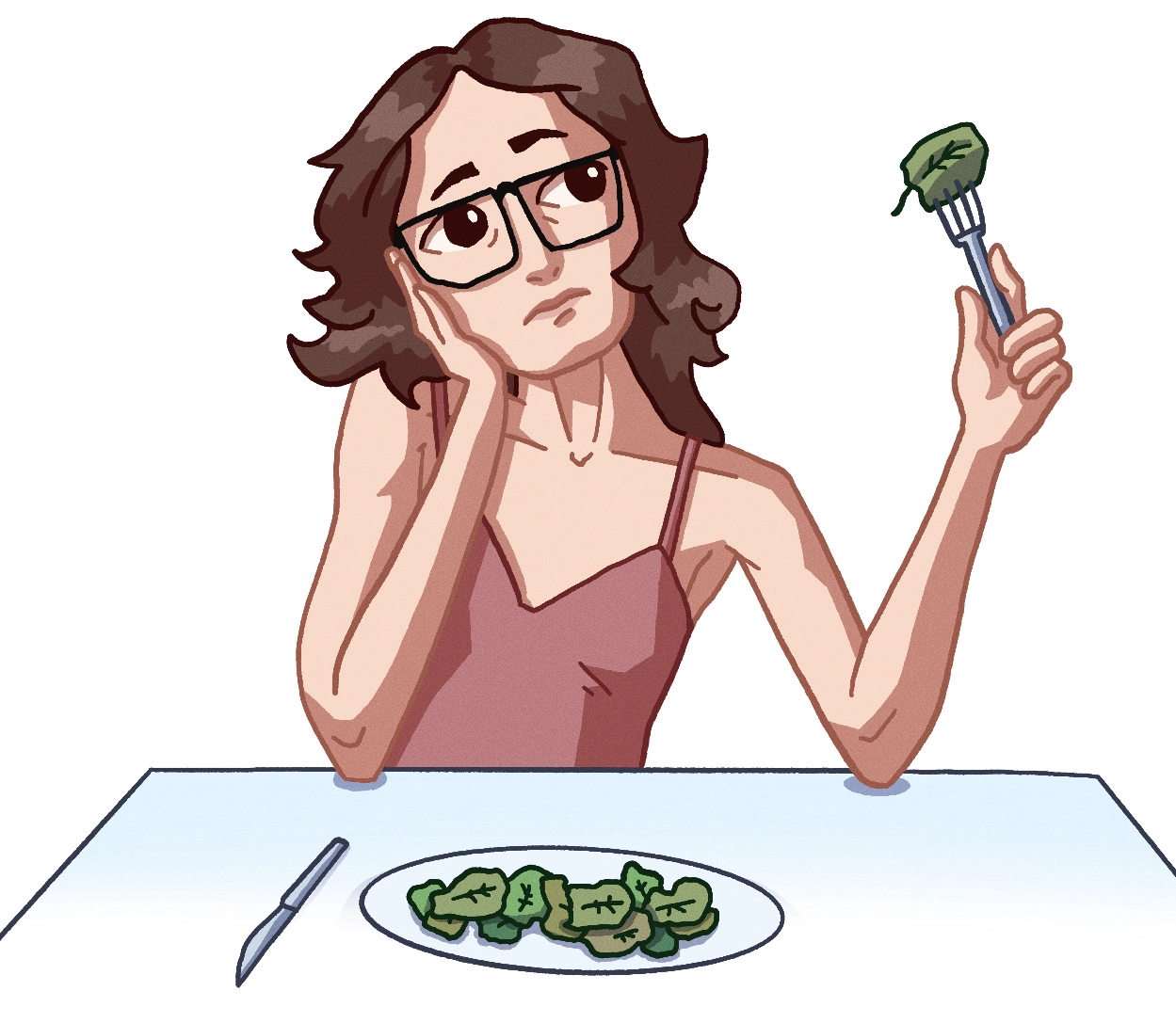
My whole life I’ve been dancing, moving and go, go, going.
It started as a forgettable thing. I would run out of time in my day to eat three meals. Then, it got easier: I thought I was saving valuable time in my day. I’d skip meals on purpose throughout high school – never anything extremely excessive and never diagnosed.
Yet, I restricted myself.
I knew as it was happening that dancing – my passion – became harder and harder. I was never the strongest dancer, but I felt myself regressing. My stamina was running out much earlier and I couldn’t support my technique as easily. While I was going backward, my peers were improving, getting new tricks, more turns and more advanced flips. As for me, my body lacked the nutrients to support the simplest of moves.
It wasn’t out of comparison. It was out of habit. For months, I ate only a banana or a piece of toast each day. I avoided my favorite foods as anytime I’d eat them, I’d feel full. I was afraid of understanding my own hunger cues. As a dancer, it’s always been crucial to understand my own body.
But it felt like I had this control over something for once – and that was something I couldn’t give up.
During a time in my life when I was still in high school, it felt like I was learning about things that were useless. I was living under my parents’ roof while still not having a driver’s license when everyone else did, making me feel like I was relying on everyone. But I couldn’t rely on myself for anything.
I strived for some sort of control, so it had to come from restricting.
I only allowed myself to eat tiny snacks, like two Oreos or gummy worms and maybe a big meal every once in a while. When I finally decided I had to consume something, it felt like I was overeating – eating anything and everything in sight. Looking back, the “overeating” was just normal, nutritious meals. When I would consume a chicken thigh with a side vegetable, I saw an entire chicken because of how I viewed food. I was so overwhelmed by the mere thought of food that even small portions felt like an entire buffet.
Dance is an industry where problems with eating are very common, thanks to a culture of body-shaming in the ballet world. Staring at yourself for hours on end in a mirror wearing nothing but a leotard can easily lead to body dysmorphia in young adults, even if the dancer has the typical “ballerina body type.”
I’ve always been thin, and even when I am eating well, my family has always commented on the way my body looks. I would hear jokes about me being a twig, which led me to spiral and continue the restricting. I ended up feeling undeserving of the food. I remember a comment being made about my order at McDonald’s … something along the lines of, “Wow, I can’t believe you can eat all that. I could never finish that!”
This led me to making comparisons with my consumption. I would constantly ask what other people were ordering at restaurants before deciding what I wanted. I would even compare the time it took to eat my food compared to my friends around me. If they were done and I was slowly picking at my food, I would eventually just decide I was done since I didn’t want the focus to be on me and my relationship with food.
I would be hyper-aware of any food being consumed near me and the amount of it, even with food not being the focal point of the conversation. If there was food in my vicinity, my mind was on it.
I would often think of how much other people were consuming and trying to almost match their amount of food. Though looking back, it made no sense – especially with how much movement I was always doing, my body was going to crave more than the average person because of how many calories I was constantly burning.
During my short time in ballet, leotards weren’t required – and even if they were, it would’ve been the last of my problems. I felt like I could hide my relationship with food with my baggy clothing. But once these eating problems began, I knew of other dancers who worked around those problems, and I started to wonder why I couldn’t be like them, too.
If these dancers I knew struggled with eating and were still so talented, maybe that was the secret. I thought maybe I needed to continue to restrict my body, to ignore the lightheaded feeling and weak muscles.
Maybe then, I would be good enough – in my dancing, in my relationships, in every aspect.
After nearly a year of almost passing out when I stood, eyes twitching and restricting, it became impossible to ignore.
Being such a sensitive topic, my family didn’t want to confront the problem in fear of making it worse. Eventually, my partner got worried and had this tough conversation with me, explaining how I needed to talk to my mom about getting help. With my partner’s support and encouragement, I cried to my mom later that night about how I didn’t like feeling this way and how I wanted to get better.
With this help, I eventually found a therapist. It was very important to me that my therapist was for mental health, not just for the issues I had with eating. I was not diagnosed, so I thought it couldn’t be “that bad.” The comparison was back, even in therapy. Other people had it worse. I thought this meant I was fine.
Throughout the entirety of my restricting, I felt I didn’t deserve to consume food. There was so much going on mentally that I couldn’t imagine myself deserving of something that every human has to do to survive day to day.
My therapist helped me find a way to track what was making me feel this way. I kept notes of how “good” or “bad” of an eating day I had and what my schedule looked like. This is how my therapist and I determined that it was control-based: The days that I struggled most were those filled with things I felt lost or stuck in.
With the help of the people close to me, less of my daily routine is devoted to control over food. I can enjoy meals – which I never could have imagined in high school. I am much more understanding of how much I need food and how it assists me in doing what I love.
There are days that the thought of eating nauseates me still, but I know how hard it was to rekindle this relationship with food. I am constantly working to be sure that all of this effort doesn’t go to waste. I never want to feel the helplessness I did when I walked into that very first therapy appointment again.
Webster’s Counseling and Life Development staff are available to assist all current students, faculty and staff. Stop by 540 Garden Ave., call the Counseling and Life Development office at 314-968-7030 to make an appointment, or email counselingld@webster.edu.

