
Period Advocacy Brought to Campus with Aunt Flow
Imagine, you are out running errands. You stand up, feel a rush. You have just started your period and have no menstrual products with you. You go to the bathroom and see the menacing metal box on the wall. The machine offers either a sketchy-looking tampon or a paper-thin pad. You have to cut your losses and pick your poison, but the machine costs 25 cents, only accepts quarters and the likelihood it is stocked with any products is a 50% chance.
This is an all too familiar reality for people who menstruate. Over 1.8 billion people worldwide menstruate each month according to the National Library of Medicine. While many people keep track of when their menstrual cycle is about to happen, no amount of counting down days or thinking it is safe to wear white pants is guaranteed.
The average price of a box of tampons or pads can range from anywhere between $6 to $16 or more. Depending on cycle length and flow amount, menstrual product users can find themselves using around 20 of their chosen period product per cycle. Multiply that by 12 and then by 40 to represent the average amount of a person’s life they will have a menstrual cycle — and you have an insane amount of money spent. Aunt Flow is working to minimize the awkward moment of having no quarters and using makeshift toilet paper pads.
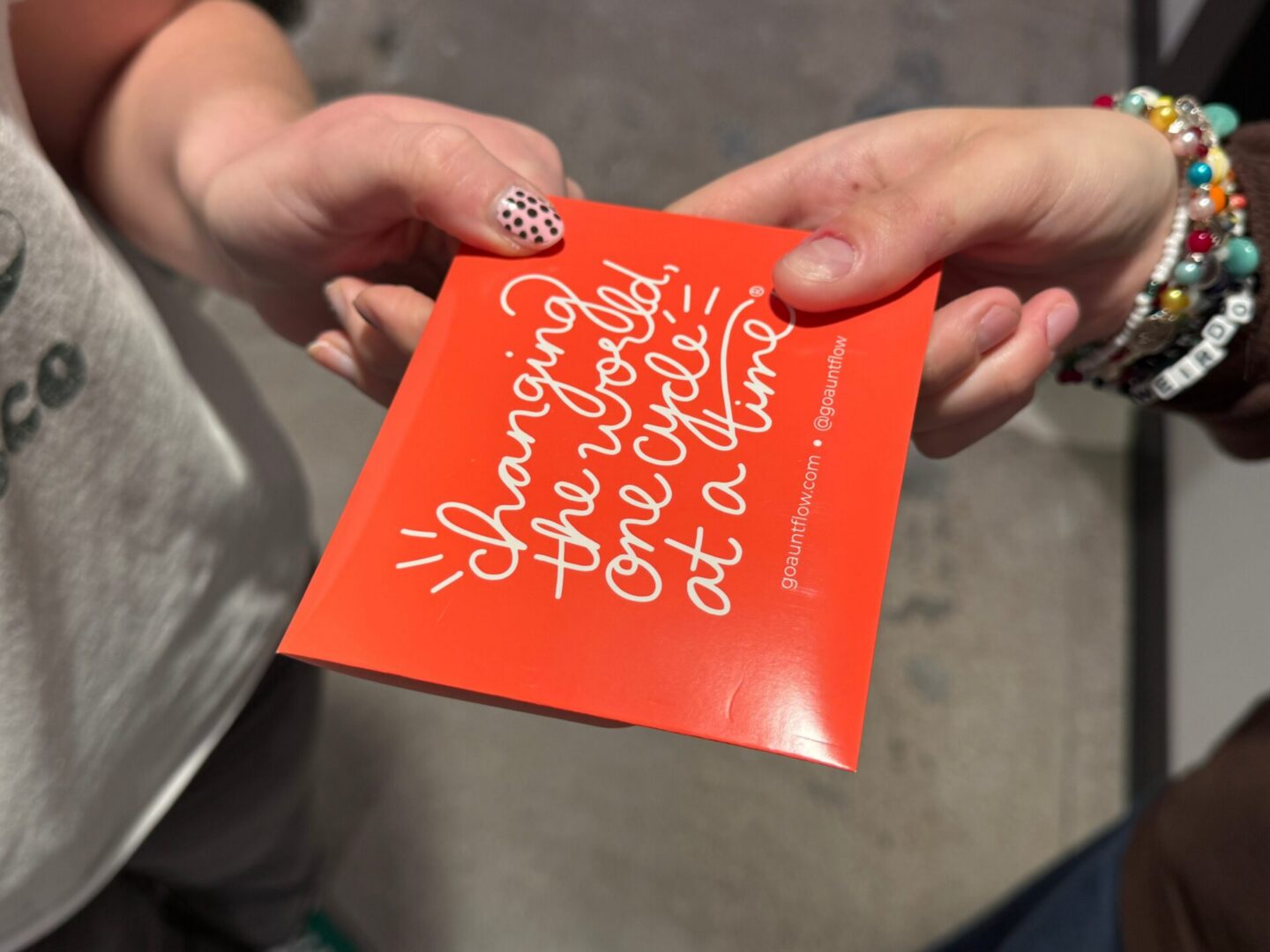
Started by Claire Coder in 2016, Aunt Flow strives to make period products accessible and free in bathrooms. When a school or business partners with Aunt Flow, they are provided a machine that is easily refillable and completely free for users to take products from. Aunt Flow tampons and pads are 100% organic cotton and packaged in cardboard and paper to reduce plastic waste. In addition to normalizing access to free period products, Aunt Flow also aims to end the stigma around periods.
“There’s people that feel like periods should be a private conversation, but what we know at Aunt Flow is that if you create shame around this, people will never have access to it, which will affect so many young women and girls when it comes to getting period products,” said Jenni Genson, director of customer success at Aunt Flow. “We know that students will leave school if they don’t have period products. And if girls are ashamed and told that this is a private conversation, instead of asking or going to the nurse’s office or going to the bathroom and finding Aunt Flow, they’re just going to leave school. And so that’s really an inequality of education.”
Having access to a free tampon or pad can make a huge difference in someone’s day, especially at school. Webster University began partnering with Aunt Flow in 2021 following Student Government Association’s (SGA) motion to incorporate more diversity and equity initiatives on campus. They decided to brainstorm ways to bring period equity — the idea that everyone has safe and affordable access to menstrual products and education — to campus. Ideas bounced around, and Aunt Flow was discovered.
The conversation of bringing Aunt Flow to Webster went beyond SGA. Members of SGA sat down with the facilities and housekeeping teams on campus and developed a strategy to ensure the machines would be checked on regularly and stocked when needed. SGA funded the initial purchase of the machines across campus and the first year of supplies; this responsibility has since been passed to the university.
However, the period equity initiative is not over for SGA. They are working through phase two of their mission, which involves bringing period products into the all gender, single stall and men’s restrooms across campus.
“Those supplies weren’t available in single stall restrooms. They had generally only been in female identified restrooms. But we also know that women aren’t the only people that menstruate. There are people who identify differently that still have periods that might be using different restrooms. So they wanted to make that accessible throughout campus, regardless of the restroom that you were in,” said Jennifer Stewart, director of student engagement.
SGA has purchased smaller product holders to be placed in the single stall and men’s restrooms across campus to accommodate those that need menstrual products. The holders are expected to be installed over the summer.
“It’s inequitable that people who have periods have to deal with these additional financial resources, financial strains and supplies and all of these other things when there are other people who just get to live their life, and they don’t have to think about it,” Stewart said. “That kind of serves the equity piece of it, making it as accessible and easy for everyone as possible.”
