
Webster Resists Trump’s Attack on Art
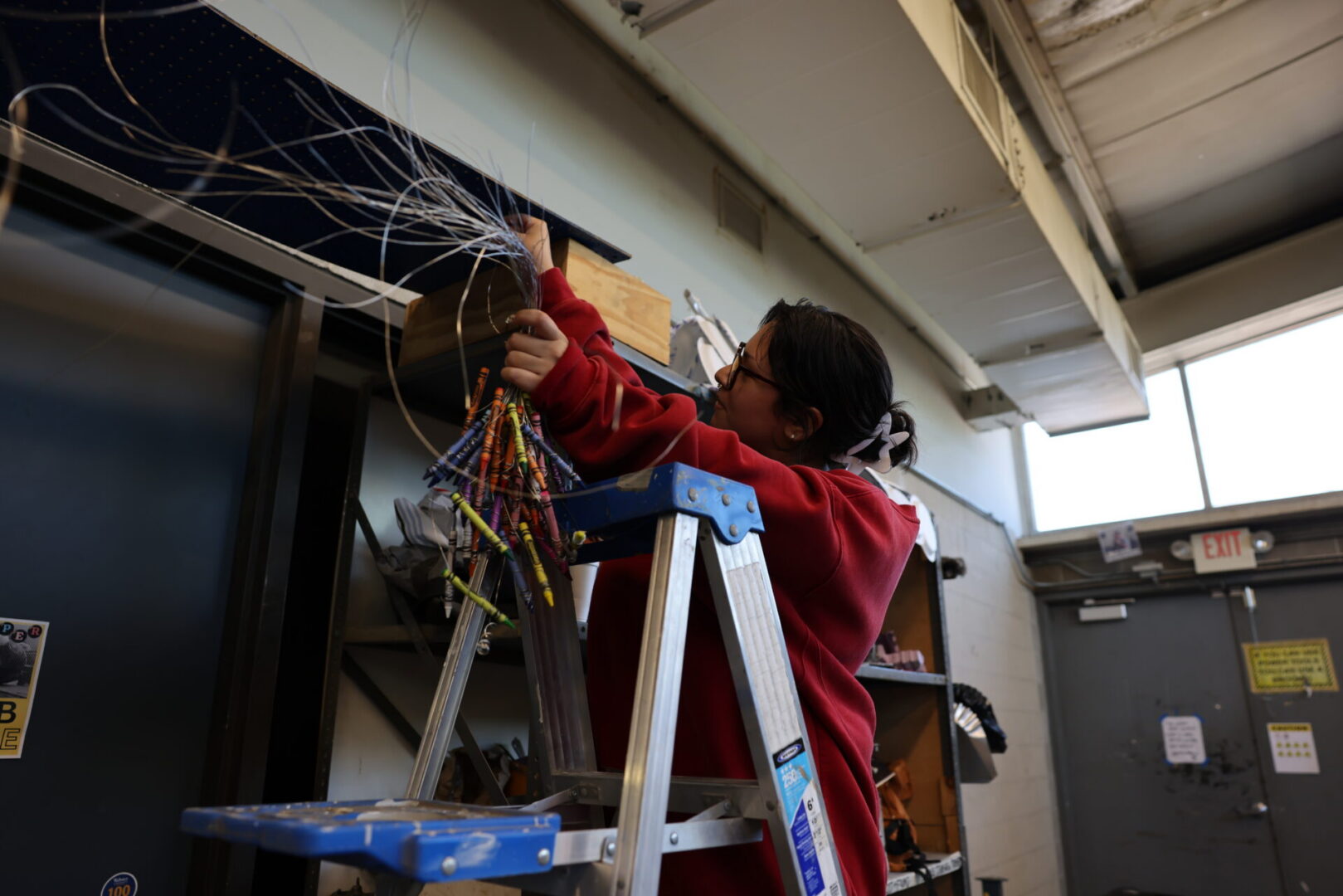
Art students at Webster University are responding to growing concerns over funding cuts under the Trump administration. Likewise, professors and university leaders have shown no hesitation in voicing how they feel about the attacks on the arts and how they affect higher education.
In early February, President Trump installed himself as the head of the Kennedy Center board of directors after overhauling the previous board with his own appointees.
Despite the center’s mission to “connect the greatest living artists with audiences of every stripe, no matter their background,” the administration has ordered the removal of multiple diverse exhibits from national parks. Some of these exhibits were related to topics like slavery, sparking growing concerns over potential art censorship by the government.
These concerns were only amplified after the administration began slashing the grants for various cultural and artistic organizations – a move that hit closer to home after the White House stripped National Endowment for the Arts funding for a number of local groups.
“I think no matter what era we’re in, whatever president we have or whatever things are happening in the political sphere, I think art is always going to react,” said Edén Magaña López, an art major.
Magaña López is currently making a piece in response to censorship from the current government for one of her classes. The assignment requires multiples of something, and Magaña López’s multiple of choice is 100 crayons. The piece will consist of a board with holes, thin wire and the crayons.
“I know we talk a lot about how censorship affects artists, but I took something very childlike, like crayons, that kids use because we talked about censorship in one of my classes and I thought about how it’s going to affect the younger generation,” Magaña López said.
Other students came up with equally creative ways to express their frustration.
“I made a performance piece of me actually boxing and doing a boxing practice match to Trump’s ‘Grab them by the p—y’ audio just because I needed to express my rage,” said art student Maura Benson.
Daniel Yezbick, a film theory professor at Webster, admires the bravery of those who are making their voices heard.
“You can only ‘speak truth to power’ until power decides to not hear it anymore. It’s why I hate when people say that. Speak truth with power,” Yezbick said. “I will give the people who continue to speak out freely from any side of the political spectrum a lot of credit. It’s a dangerous time to do that.”
First-year art professor Stephanie Mercedes has a large portion of works which cover the history of the Argentinian junta and the desaparecido (ones who have disappeared). The era details a campaign by the Argentinian government that took place for seven years against their dissenters during which the military targeted students, writers and journalists, making anyone who disagreed with them “disappear” from 1976 to 1983.
“I think that’s what’s really terrifying for me is that it was a period of time where a dictatorship took over,” Mercedes said. “People disappeared; the people who were artists, art students, creative people — anyone who was protesting the systems of power. And unfortunately, I think there’s so many parallels between that period and what’s happening now.”
