
Is ADA at Webster ‘Nada?’
Webster University promotes a diverse campus. On the home page of the university website, there are multiple references to global campuses, info links for international students and study abroad programs. On the second floor of the University Center (UC), there are flags of every country Webster hosts students from. However, promoting a “diverse student body” does not just mean supporting international students; it also includes supporting students who are diverse in other ways.
According to Webster University’s accommodations page, acceptable disability law allows campuses to fulfill their accessibility obligations in one of two ways: by rendering all buildings accessible or by scheduling classes for those students who require accessible classrooms only in accessible buildings.
Webster University fulfills its obligation via the second option, meaning Webster is technically compliant with the Americans with Disabilities Act (ADA). However, some students argue that, in order to be properly involved with campus life like the university encourages students to be, accessibility needs to extend outside the classroom.
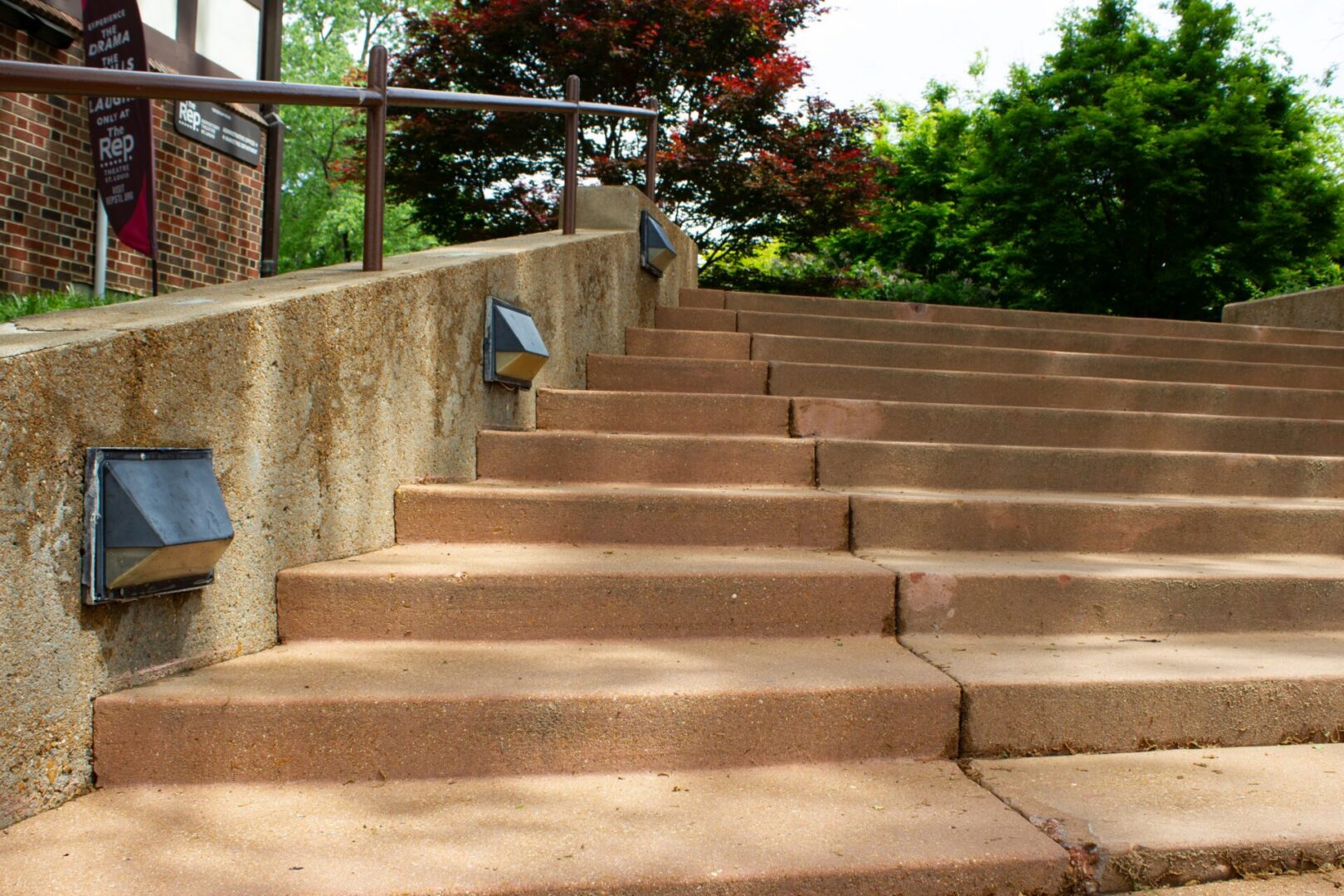
Nonclassroom spaces like the UC, where some of the main restaurants on campus are located, and the Quad, where a number of Campus Activities and club events are held, can be difficult to access for students who have a hard time using stairs.
“The stairs we have are nice,” junior English major Ava Erwin said, “but we don’t have really any accessible ways to get anywhere … all the ramps we do have are pretty out of the way. It would be nice to have something that’s a little closer to the building or the actual door that people use.”
While mobility aids are meant for those who need them, they are used by students all across campus. Some often use the automatic door buttons when carrying big loads, or when the doors are too heavy to open, or the elevator in Webster Hall for convenience – because who would want to go up four flights of stairs for their class?
Other multi-story buildings like Thompson House, home to the music department, and Pearson House, which is currently undergoing renovations but was previously home to the English and Philosophy departments, have no elevators – making the buildings inaccessible to some students.
While accommodations can be made for classes to be transferred to more accessible buildings, this can cause issues for students with short-term needs like injuries that might temporarily put them in a wheelchair or crutches. This can also alienate students requiring mobility aids from attending events in these buildings.
Both Pearson and Thompson House regularly host events such as student presentations and recitals, guest speakers and places for students to collaborate independently. Other buildings, like the Loretto-Hilton Center, may have an elevator for student use, but they are often places that are difficult or improbable to use.
“Even the Loretto-Hilton building becomes a nightmare to navigate when dance majors become injured and all of their classes are on the second floor with one elevator at the very back of the building,” Webster Alumna Taylor Lee said.
The process of applying for physical and academic accommodations can feel daunting, especially for students who are already trying to adjust to the transition to college. While the disability department may be willing to help students with accommodations, many still find the application process difficult and confusing, causing students who need the assistance to turn away.
“I had notes for reasonable accommodations from my primary care, and was ready to apply, but the form itself was hard to follow,” said Lee. “While extensive, I could easily tell that the form would not accurately reflect me and my access needs … I tried to schedule a meeting with an ADA coordinator to work through applying, however they said the form had to be completed first.”
Webster’s staff is not blind to the issues students may face when it comes to ADA accommodations and campus accessibility.
“I think there is always room for growth to make the campus more accessible,” said Rachael Amick, director of Housing and Residential Life. “Know that it is part of conversations when we look at building designs, furniture choices and layout. When we learn more about needs from students, we try to implement those changes whenever possible.”
Amick also discussed some of the difficulties in making the older buildings on campus, such as Pearson and Thompson House, accessible.
“On a campus with older buildings like ours, sometimes those plans need to be much longer-term, since the cost of major renovation can be very high,” Amick said.
She reminds students that it’s always better to reach out, even if they’re unsure of the support they’ll receive, rather than try to tough it out on their own.
“Everyone I work with on campus cares a lot and wants to help students succeed … So, I encourage students to always reach out if they need help,” Amick said.
It cannot be said that Webster does not support its students in many ways, but there is still room to improve and to truly establish an accessible campus for all.
To inquire for more information, students can contact Disability Accommodations by emailing disability@webster.edu. To reach Assistive Technology, email atarc@webster.edu. Finally, students may call Public Safety for any accessibility concerts at (314)968-7430.
