
Food Pantry Expands to Meet Rising Student Need
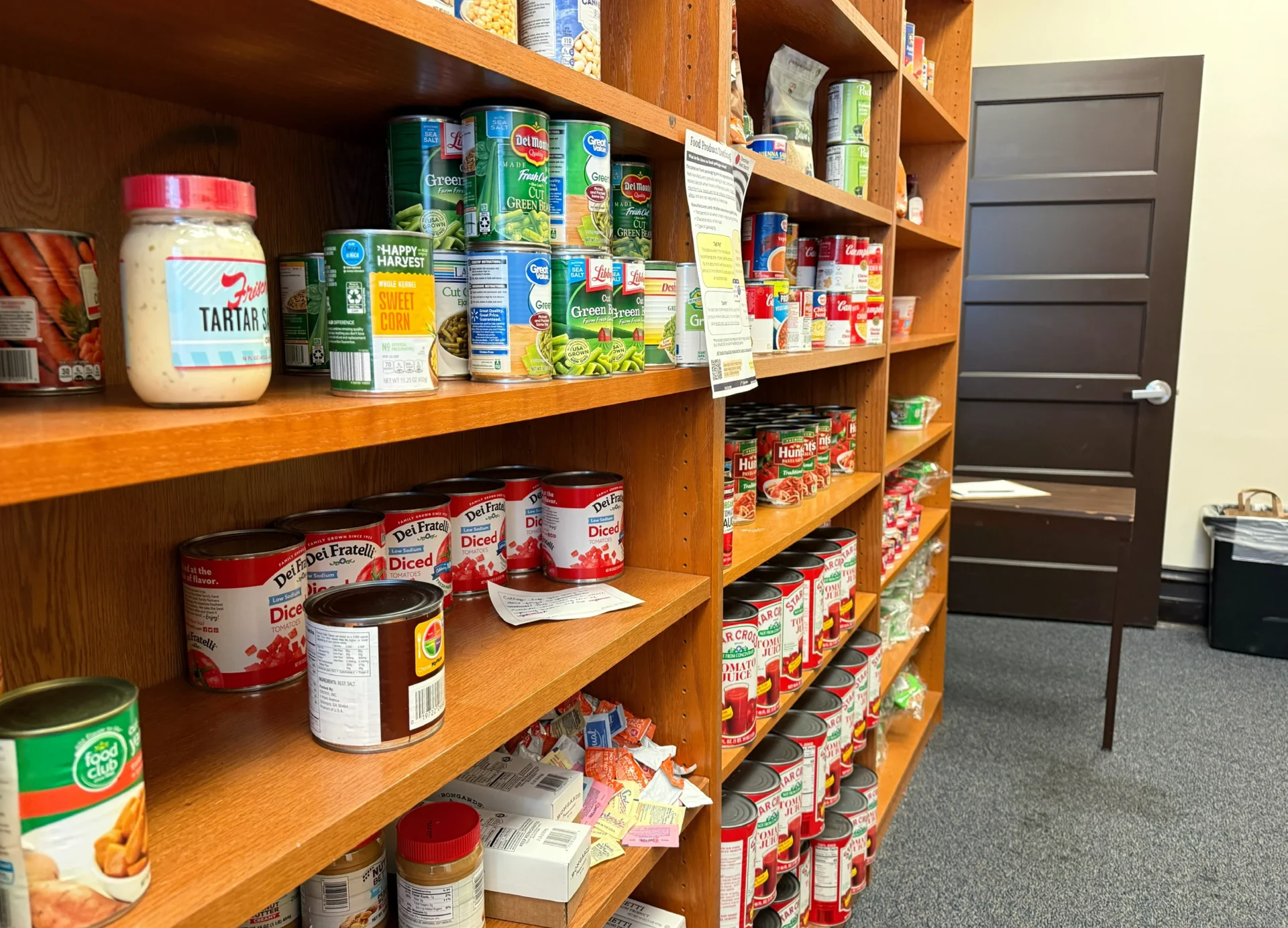
were the sole reason the pan- try remained stocked. As it has grown, the pantry has been able to secure an additional boost of support to help keep up with demand.
“There are so many other people in the community [who donate to the pantry]. There’s a church at Lockwood and Elm that has a community of people who give us food … other organizations that put together food drives on campus,” Geraghty-Rathert said.
In January 2025, Operation Food Search implemented a pilot program partnering with five universities across the St. Louis area, including Webster. The program aims to provide campuses with goods for food pantries to ensure students do not have to decide between taking care of themselves or attending school.
“They’ve always served K-12 schools at Operation Food Search, and then they heard that there was a great need for food on college campuses,” Geraghty-Rathert said. This year, the pantry brought in a student intern from the School of Communications to promote the pantry. This semester’s intern, Riley Reed, hopes to bring aware- ness, as well as to let students
know it is okay to need help. “We created a campaign with the hope of spreading awareness and promoting shameless access,” Reed said.
The Webster University Grab & Go Food Pantry is located in Webster Hall, room 329-1. It is available to students, faculty and staff 24/7.
Seen as a standard resource among public universities, food pantries can be few and far between at private institutions like Webster University. Without state-provided funding, filling shelves with food for hungry students can be ex- pensive and difficult.
About 23% of college stu- dents experienced food inse- curity, according to a 2020 report from the U.S. Govern- ment Accountability Office.
Medical experts agree that without proper food and nutri- tion, a person is more suscep- tible to experiencing chronic health problems, anxiety and depression.
At Webster, the need is vis- ible. In 2024, an adjunct pro- fessor surveyed 750 students, 49% of whom reported run- ning out of food. Of the re- spondents, 47% identified as domestic students and 53% as international students.
The idea for Webster’s on- campus food pantry began nearly a decade ago. A transfer student from a local communi- ty college found herself inter- ested in enrolling at Webster, but needed to attend a univer- sity with a food pantry to feed herself and her three young children. She asked legal stud- ies professor Anne Geraghty- Rathert, “Where is the on-cam- pus food pantry?”
When Geraghty-Rathert
told her none existed on Web- ster’s campus, the student feared she would not be able to balance paying for tuition and providing food for her family.
In response, Geraghty- Rathert cleared a shelf in her office and placed a few es- sentials, welcoming other students who needed the re- source to come in and take what they needed. The de- mand became obvious as items rapidly disappeared.
The pantry expanded from a small shelf of household staples to a larger shelf in the hallway, then into a closet space, and now, in a closed-off classroom. The current location provides students the opportunity to remain anonymous when vis- iting the pantry, helping com- bat the shame some felt from seeking assistance.
For the almost 10 years the pantry has been open, school faculty and outside donors
Donations of non-perishable food and personal hygiene items are welcome by drop- off directly at the pantry or at Geraghty-Rathert’s office in Webster Hall, room 317.
